
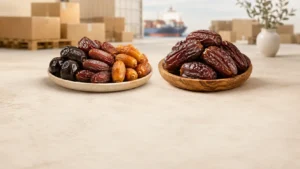
?Which Countries Know Iranian Dates and Which Know Medjool
Medjool dates are well-known in the United States, Canada, the United Kingdom, Germany, Australia, and Arab countries like the UAE and Qatar.
Iranian dates are more popular in neighboring countries and East Asia: Azerbaijan, Turkey, Iraq, Kazakhstan, Russia, South Korea, Japan, and also the UAE
.Interesting fact: The UAE knows both types. That makes the UAE a golden market for you
?How Are They Used Differently
People usually eat Medjool dates raw as a luxury snack. They are also used in restaurant desserts, Christmas cookies, and handmade chocolates. Medjool is expensive and made for Western markets. It looks large and beautiful and tastes like caramel.
Iranian dates are eaten daily in Iran, not just during Ramadan. In southern Iran, people eat dates with ardeh (sesame paste) before lunch as a traditional and nutritious appetizer. In the rest of Iran, dates are eaten with walnuts, raisins, or used in traditional sweets. For Iranians, dates are a symbol of sweetness and blessing. Dates are always present at Yalda Night, weddings, and religious ceremonies.
Medjool does not have this daily, cultural use. It is more for luxury and special occasions.
The Four Main Types of Iranian Dates
Mazafati Dates
Very juicy and sweet. People eat them fresh, especially during Ramadan. The main markets are East Asia (South Korea, Japan) and Russia. Price is medium.
Piarom Dates
Semi-dry with a chocolate-like taste. They have a long shelf life (up to 18 months without refrigeration). They are expensive and great for luxury export to Europe and Arab countries. Many say Piarom is a good substitute for Medjool at a lower price.
Kabkab Dates
Very sweet and soft. They are cheap. Best for bulk buyers and price-sensitive markets. Great for date paste and industrial sweets.
Zahedi Dates
Dry and semi-sweet. Very cheap. Mostly used for industrial purposes (date syrup, date paste). Very long shelf life and good for hot climates.
?Which One Is Cost-Effective and Which Is High Quality
If you want the cheapest option, choose Kabkab or Zahedi. But if you want high quality, go with Piarom or Mazafati.
A simple comparison:
- Medjool:expensive, luxury, Western market
- Piarom:expensive, luxury, substitute for Medjool
- Mazafati:medium price, juicy, East Asia
- Kabkab:cheap, industrial, price-sensitive markets
- Zahedi:very cheap, industrial, long shelf life
- Dates in Healthy Diets (A Big Trend) – Nutrition Facts
Today, healthy and natural diets are very trendy. Dates, with their natural sugar, high fiber, and antioxidants, are perfect for healthy meals.
Many famous healthy snack brands use dates as a natural sweetener. Brands like MyProtein, Bulk Powders, Healthline, and RXBAR use dates in their products.
You can also make homemade energy bars, diet smoothies, and sugar-free sweets with dates.
Health Benefits and Possible Downsides
Benefits
- Natural energy booster (healthy simple sugars)
- Great source of fiber (helps digestion and prevents constipation)
- Contains iron and potassium (good for anemia and blood pressure)
- Rich in antioxidants (prevents cell aging)
Possible Downsides
- High in calories (can cause weight gain if eaten too much)
- High in sugar (diabetics should be careful)
- Too many dates may cause bloating or stomach pain
Date Seed Coffee (A Traditional and Healthy Drink)
Here is an interesting fact that many foreigners do not know: you can make coffee from date seeds.
The seeds are roasted and ground. The result is a coffee-like drink with a milder taste and no bitterness. The best part? It has no caffeine. People with high blood pressure or those who want to drink coffee at night without losing sleep can enjoy date seed coffee.
It also has health benefits: rich in antioxidants, good for the heart and digestion.
In Iran, this coffee is an old tradition, but it is not well known outside the country. You can highlight this in your article.
Step by Step: How to Export Dates from Iran (or Import to Europe)
Step 1: Request a Quote and Samples
- Buyer contacts the exporter, specifies date type, quantity, and destination.
- Exporter gives price (FOB Bandar Abbas or CIF buyer’s port).
- A 5-10 kg sample is shipped. Sample cost is sometimes deducted from the final order.
Step 2: Negotiation and Contract
- Both sides agree on price, quantity, packaging, and shipping terms.
- A Proforma Invoice is issued.
- Buyer can request a Lab Test Report to confirm quality.
Step 3: Order Confirmation and Preparation
- Buyer pays a deposit (usually 30-50%).
- Exporter prepares the product from warehouse or factory.
- Final packaging (cartons, pallets, with or without buyer’s brand) is done.
Step 4: Obtaining Export Licenses and Certificates (Very Important for Europe)
- Phytosanitary Certificatefrom Iran’s Plant Protection Organization. This confirms the product is free from pests and diseases.
- Lab Test Reportproving no banned pesticides or heavy metals (essential for Europe).
- Certificate of Originfor lower customs duties in some countries.
Step 5: Transport to Port
- Product is trucked to Bandar Abbas(Iran’s main export port).
- Exit customs procedures are completed.
Step 6: Loading and Document Submission
- Product is loaded into a container (regular or refrigerated depending on date type) and buyer request.
- Ship sails. Exporter sends the buyer these documents:
- Bill of Lading
- Commercial Invoice
- Packing List
- Phytosanitary and Origin Certificates
Step 7: Arrival at Destination Port (for Europe)
- Ship arrives at destination port (e.g., Hamburg Germany, Rotterdam Netherlands, or Barcelona Spain).
- Buyer or their customs broker presents documents to European customs.
- European customs may take samples for testing (especially for pesticides).
Step 8: Customs Clearance and Final Payment
- Buyer pays the remaining balance (50-70%).
- Customs clears the goods.
- Buyer takes delivery and moves product to their warehouse.
Important Notes for Exporting to Europe
-
- Pesticides:Europe has very low limits for pesticides. Only buy from farms that use approved chemicals.
- Packaging:Must be clean, wood-free (to prevent pests), and have English labels including: date type, weight, production date, and country of origin.
- Shipping Conditions:High-moisture dates (Mazafati) must be shipped in refrigerated containers (0-4°C). Otherwise they will spoil.
Shipping Time:The whole process from order confirmation to delivery in Europe takes about 4-6 weeks.
Iranian Dishes Made with Dates
Dates are used in many traditional Persian dishes and sweets. Here are some of the most famous ones:
|
Dish Name |
Description |
| Ranginak | A popular southern Iranian sweet made with dates, walnuts, and cinnamon, topped with fried flour and oil. |
| Khorma Shireh (Date Syrup) | A thick, natural sweetener made from dates. Used in breakfasts, desserts, or mixed with sesame paste (ardeh). |
| Date and Walnut Cookies (Noon Khorma) | Soft cookies made from date paste, walnuts, and sometimes cardamom. Common in southern Iran. |
| Sholeh Khorma (Date Porridge) | A warm, sweet porridge made with dates, rice flour, cinnamon, and sometimes rose water. Traditionally served during Ramadan. |
| Date Smoothie (Khorma Shake) | A simple mix of dates, milk or plant-based milk, banana, and sometimes cinnamon or cocoa. Very popular in Iranian homes. |
| Date and Ardeh (Sesame Paste) | A simple and traditional breakfast or pre-meal snack. Dates are dipped in ardeh (sesame paste). Very common in southern Iran. |
| Energy Balls (Homemade) | Made with blended dates, nuts (walnuts, almonds), cocoa powder, and coconut flakes. No baking needed. |
Final Call to Action
We are a direct exporter of premium Iranian dates.
What we offer:
- Best quality Mazafati, Piarom, Kabkab, and Zahedi dates
- FOB Bandar Abbas or CIF your port
- All necessary certificates (Phytosanitary, ISO, lab test)
- Sample shipment available
- Free guidance for first-time buyers
📊 Nutritional Value & Daily Intake
Nutritional Value of Dates (per 100g / 3.5 oz)
| Nutrient | Amount (per 100g) | % Daily Value |
| Calories | 277 – 320 kcal | 14-16% |
| Carbohydrates | 75g | 25% |
| – Natural Sugars | 66g | — |
| Fiber | 7 – 8g | 28% |
| Protein | 2 – 3g | 4% |
| Fat | 0.2 – 0.5g | 1% |
| Potassium | 650 – 750mg | 18% |
| Magnesium | 50 – 60mg | 13% |
| Iron | 1 – 1.5mg | 6-8% |
| Calcium | 35 – 40mg | 3-4% |
✅ Note: Dates are naturally high in sugar, but the sugar is unrefined and comes with fiber, which slows absorption.
📊 Calorie Content by Date Variety (per 100g)
| Date Variety | Calories (per 100g) | Notes |
| Medjool | ~ 277 kcal | Large, soft, caramel-like taste |
| Piarom | ~ 280 kcal | Semi-dry, chocolate-like taste |
| Mazafati | 250 – 290 kcal | High moisture, varies by harvest |
| Kabkab | ~ 240 kcal | Very sweet, soft texture |
| Zahedi | ~ 220 kcal | Dry, semi-sweet, lower calorie |
✅ Correct Note:
The calorie count varies significantly depending on the variety and moisture content. A single date (about 8-10g) contains approximately 23 to 70 calories depending on its type and size.
Recommended Daily Intake
- For general health:3 – 5 dates per day (about 80-140 calories)
- For athletes or active individuals:5 – 7 dates per day (natural energy boost before or after workout)
- For diabetics:1 – 2 dates per day (consult your doctor; choose dry varieties like Zahedi with lower glycemic index)
- Maximum recommended:10 dates per day (excess may cause weight gain due to high calorie content)
💡 Tip: One Medjool date (larger) contains about 65-70 calories. One smaller Iranian date (like Mazafati or Piarom) contains 23-30 calories. Adjust your intake based on size.
📦 Storage & Shipping Conditions (Important for Importers)
Storage Conditions (after arrival)
| Condition | Requirement |
| Temperature | For dry dates (Piarom, Zahedi, Kabkab): 15°C – 25°C (room temperature). For fresh dates (Mazafati): 0°C – 4°C (refrigerated storage only). |
| Humidity | Below 50% for dry dates. For Mazafati, keep in sealed container to prevent moisture loss. |
| Light | Keep in dark place or opaque packaging. Direct sunlight accelerates sugar crystallization. |
| Packaging (after opening) | Keep in airtight container or resealable bag. Use within 1-2 months after opening for best quality. |
Shipping Conditions (from Iran to your port)
| Pallets | Standard 120×100 cm pallets, stretch-wrapped, corner protection. |
| Carton labeling | Each carton must show: product name, variety, net weight, harvest date, lot number, country of origin (Iran). |
| Factor | Requirement |
| Container type | Standard dry container for Piarom, Zahedi, Kabkab, and dry dates. Refrigerated container (0-4°C / 32-39°F) for Mazafati (fresh, high-moisture dates). |
| Packaging for shipping | Cartons: 5kg, 10kg, or 20kg. Inner plastic liner to preserve moisture. For Mazafati: vacuum-packed or nitrogen-flushed. |
Shelf Life
- Piarom, Zahedi, Kabkab (dry varieties):18 – 24 months in unopened packaging, stored in cool, dry, dark place.
- Mazafati (fresh, high moisture):12 months when frozen (-18°C). 3 months when refrigerated (0-4°C). Do not store at room temperature.
- After opening (dry dates):Best used within 2 months. Reseal tightly after each use.
✅ Pro tip for importers: If you are shipping Mazafati dates for the first time, we strongly recommend using refrigerated container (reefer) at 0-4°C. For Piarom and other dry varieties, standard dry container is sufficient.